Targeting Inflammation at Its Source: How Kerui Wu Is Rethinking Precision Treatment
The human immune system is essential to healing, but when its signals don’t turn off at the right time, they can cause lasting harm. In chronic diseases and even everyday wounds, the immune signals meant to protect the body can linger, damaging healthy tissue and making long-term treatment difficult. At UNC Greensboro (UNCG), Dr. Kerui Wu is developing a targeted delivery platform designed to act on the immune cells that help keep inflammation running — aiming for more precise control with fewer systemic side effects.
“In modern medicine, we still have many diseases that are not curable,” Wu says. “Cancer, autoimmune disease, even viral infections. The immune system is a powerful weapon, but when one component goes wrong, the consequences can be severe.”
Rather than targeting a single disease, Wu’s research focuses on the immune system itself. Autoimmune and inflammatory diseases, he says, provide a rigorous testing ground for new therapeutic strategies—challenging models that can reveal whether a treatment truly works in complex, real-world conditions.
Most existing therapies for chronic inflammation rely on systemic suppression— dampening immune activity throughout the body. Steroids and nonsteroidal anti-inflammatory drugs can reduce symptoms, but often at a cost: increased infection risk, organ damage, and serious side effects that make long-term use untenable.
“We don’t want to shut off the entire immune system,” Wu explains. “We want to control the critical components driving the disease.”
That philosophy led his lab to focus on macrophages — immune cells that act as central communicators within inflamed tissue. Unlike cells with highly specialized roles, macrophages appear everywhere inflammation occurs. They integrate signals from many immune pathways and relay instructions to surrounding cells, including those involved in wound healing and scar formation.
Because macrophages sit at the center of these signaling networks, Wu saw them as a leverage point: regulate macrophages, and it becomes possible to rebalance inflammation locally without suppressing immune function throughout the body.
Dr. Wu’s project is developing a macrophage-targeted delivery platform designed to bring anti-inflammatory therapeutics directly to immune cells that drive chronic inflammation. By using nanoparticle-based carriers engineered for targeted uptake by macrophages, his research aims to shift macrophages toward a less inflammatory state and reduce tissue inflammation in disease models.
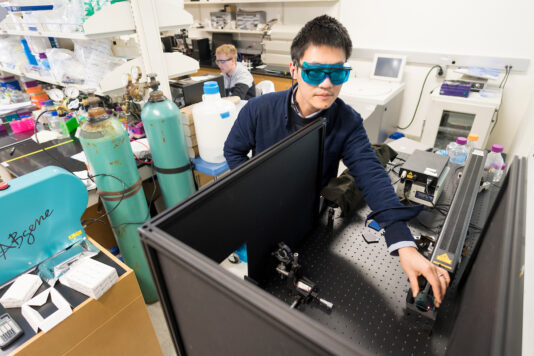
The platform has already shown promise in laboratory and animal models, including previously published work on liver inflammation. With NCInnovation support, Wu’s team is now expanding into more advanced testing— building organoid models to study how reprogrammed macrophages interact with skin cells and fibroblasts involved in wound healing and scar formation.
The clinical relevance of Wu’s work became personal when his 2-year-old child suffered a cut on the face. As any parent would, Wu asked doctors what could be done to speed healing and reduce inflammation to prevent scarring.
“There was nothing available,” he recalls. “No product designed to control inflammation at the site of the wound.”
That moment reinforced what his research already suggested: Iinflammation itself is often the problem, and effective treatment requires acting locally— at the precise site where damage is occurring.
That insight carried into Wu’s customer discovery efforts. When he spoke with parents about potential wound-care solutions that could reduce inflammation and improve healing, the response surprised him.
“Every parent we spoke with said they would be interested,” Wu says.
For a researcher early in his career, the result was both validating and instructive. It underscored the importance of designing therapies not only around biological mechanisms, but around real-world needs, an approach Wu now sees as central to his research program.
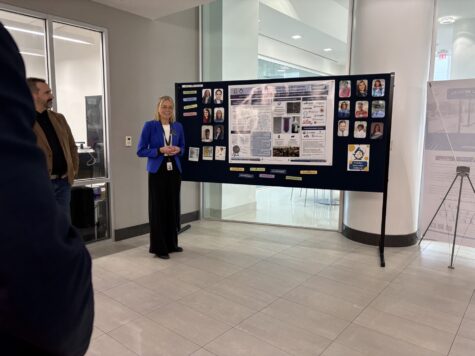
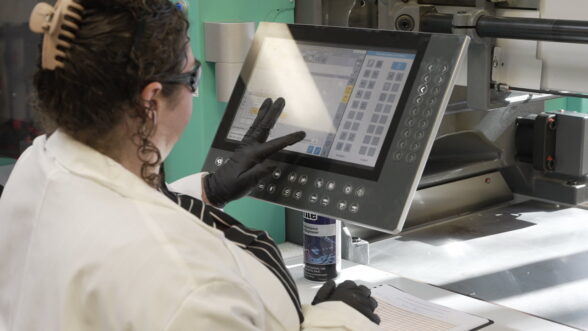
With support from NCInnovation, Wu is advancing both the science and the translation of his work. The award provides critical resources, including funding for bioprinting equipment to construct organoid models and support for collaborations with researchers at North Carolina A&T State University and UNC-Chapel Hill to validate the platform.
Equally important, NCInnovation is helping Wu navigate the unfamiliar terrain of commercialization– connecting him with industry partners and providing entrepreneurial-in-residence guidance as he explores regulatory pathways. Depending on formulation and use, the technology could move forward as a wound-care bandage, a topical skincare product, a medical device, or eventually a therapeutic delivered intravenously for chronic inflammatory diseases.
“Those are decisions we’re working through now,” Wu says. “This award gives us the space to test, gather safety data, and determine the right path forward.”
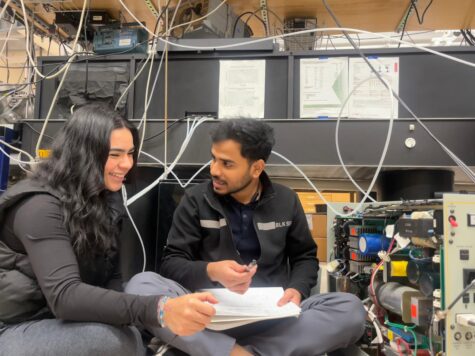
Students also play a central role in the project. Wu sees commercialization-focused research as a powerful training ground— especially in a competitive job market where not every graduate student will pursue a traditional academic career.
His students gain exposure not only to experimental science, but also to customer discovery, regulatory considerations, intellectual property, and product development. For Wu, that breadth is intentional.
“I want students to understand the full process,” he says. “Not just the science, but how research connects to patients, consumers, clinicians, and real-world use.”
Over the longer term, he hopes to see his work contribute to North Carolina’s economy— through new companies, new jobs, and therapies that improve quality of life. Just as important, he hopes to one day offer the same mentorship and support he has received at UNCG to the next generation of researchers.
“If these projects can make it to market,” Wu says, “and help patients while also contributing to the state’s workforce and economy– that’s success.”