How North Carolina’s Innovation Ecosystem Is Aligning for Impact
“We want a North Carolina where innovators say, of course I built my company here– and I wouldn’t think of leaving.”
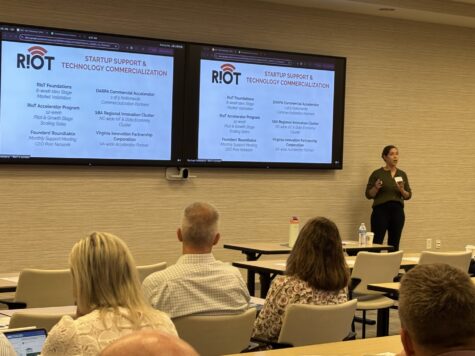
That vision, shared by Michelle Bolas, Acting President and CEO of NCInnovation, captures a growing sense of momentum across the state, one that was palpable as leaders, founders, researchers, and partners gathered for RIoT’s annual State of the Region event.
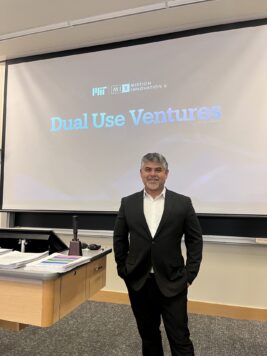
During the event, NC IDEA announced a new strategic joint venture, bringing the RIoT Accelerator Program into NC IDEA’s statewide accelerator portfolio while launching RIoT Labs to focus on dual-use and defense-adjacent technologies.
But the deeper story unfolding in the room was not about a single decision or organizational change. It was about something larger taking shape: North Carolina’s innovation ecosystem is choosing collaboration– intentionally, confidently, and at scale.
For Bolas, that choice reflects a belief that the state’s future depends not just on brilliant ideas, but on how well the system around those ideas works together.
“At the heart of this ecosystem are two things,” she said. “Volume and quality. We want a high volume of truly high-quality technologies and startups becoming businesses– technologies that matter to industry, to investors, and to the world.”
When ecosystem partners align around those shared goals, she explained, the impact compounds.
“NC IDEA brings a statewide network of entrepreneurs, investors, and local partners that strengthens the pipeline,” Bolas said. “RIoT brings deep expertise in technology acceleration, helping move ideas to a place where they’re market- and investor-ready. And NCInnovation brings forward deep research technologies from universities across the state and helps advance them to that next level of readiness.”
What makes this moment different, she added, is the growing recognition that innovation in North Carolina is no longer confined to a few familiar places.
“Technology-based innovation is happening all across the state,” Bolas said. “The question isn’t whether it looks like RTP everywhere. The question is whether the opportunity is real– and whether it’s worth investing in. This level of collaboration is validation that it is.”
That validation resonates deeply with Tom Snyder, Vice President of Programs for NC IDEA and previously a co-founder of RIoT, who has watched North Carolina’s ecosystem evolve from both regional and statewide vantage points.
“RIoT has always believed there’s space at the table of entrepreneurship and technology for all people, from all places,” Snyder said. “This partnership expands that table. It invites more people in.”
Rather than disruption, Snyder sees continuity, built on years of trust and shared work.
“On day one, it doesn’t feel radically different because we’ve already been collaborating closely for a long time,” he said. “What’s different now is our ability to think bigger, move faster, and do it together.”
That sense of togetherness matters in a moment defined by rapid change.
“There’s a lot of uncertainty right now,” Snyder said. “But uncertainty breeds opportunity. When organizations come together in a coordinated way, we’re better positioned to seize that opportunity and fill gaps that naturally emerge.”
For founders and communities across North Carolina, the benefits are tangible. Strong networks, Snyder said, don’t just add value—they multiply it.
“You don’t have to live in a traditional tech hub to build a technology company anymore,” he said. “We’re seeing founders build businesses in places like Wilson while tapping into resources across the state. This collaboration accelerates that possibility– from the coast to the mountains.”
At the statewide level, Thom Ruhe, President and CEO of NC IDEA, sees the alignment as part of a broader opportunity– one that could redefine how research becomes real-world impact.
“The system for tech transfer and commercialization is ripe for change,” Ruhe said. “Direct investment in research continues to grow, but commercial outcomes are declining. That tells us the system needs to evolve.”
The challenge is significant. Fewer than five percent of university inventions in the United States ever reach the marketplace. But Ruhe sees that gap not as discouraging—but as an invitation.
“If we can move that number even modestly, the impact is enormous,” he said. “This is a chance for North Carolina to model a better way– one where research, entrepreneurship, and support systems are intentionally connected.”
In that system, NCInnovation plays a uniquely stabilizing and enabling role, particularly at a time when federal funding pathways face uncertainty.
“How fortunate are we to have NCInnovation at a moment like this,” Ruhe said. “That kind of support matters—not in theory, but right now.”
Just as important, he added, is ensuring that opportunity reaches every corner of the state.
“There are brilliant researchers everywhere– not just at R1 universities,” Ruhe said. “When we unlock that potential, we create impact that benefits society, creates jobs, and strengthens the communities around those institutions.”
For policymakers and partners watching the ecosystem mature, Bolas believes the message is hopeful and clear.
“We’re focused on being additive, not duplicative,” she said. “We’re making intentional connections, closing gaps, and supporting innovators at the moments that matter most. What we can do,” Bolas said, “is make sure innovators feel supported here. That discoveries don’t stall. That ideas become companies. And that people believe this is a place where innovation can truly thrive.”